कामाख्या मंदिर में पूजा कैसे करें? पूरी विधि और महत्वपूर्ण नियम (2026)
माँ कामाख्या मंदिर में पूजा कैसे करें? जानें 2026 की सही पूजन विधि, सामग्री सूची, गर्भगृह शिला स्पर्श के नियम...

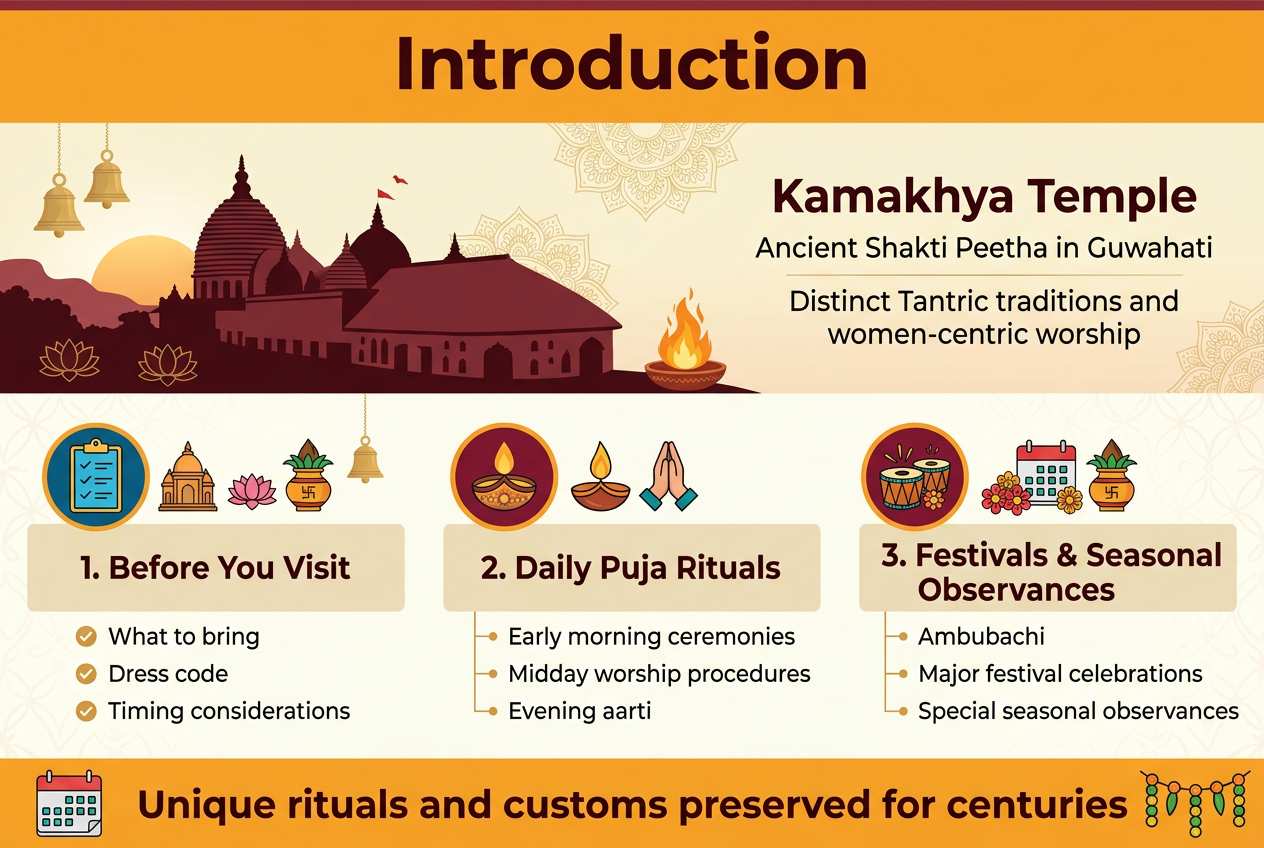
Visiting the sacred Kamakhya Temple requires understanding its unique rituals and customs that have been preserved for centuries. This complete guide is designed for first-time visitors, regular devotees, and anyone seeking to participate respectfully in the temple’s spiritual practices.
Kamakhya Temple stands apart from other Hindu temples with its distinctive Tantric traditions and women-centric worship practices. Located atop Nilachal Hill in Guwahati, this ancient Shakti Peetha follows rituals that you won’t find anywhere else in India.
This guide covers the essential preparation steps you need before your visit, including what to bring, dress codes, and timing considerations. You’ll also learn about the daily puja rituals and worship procedures, from the early morning ceremonies to the evening aarti. We’ll walk you through the major festival celebrations like Ambubachi and special seasonal observances that make Kamakhya Temple truly unique.
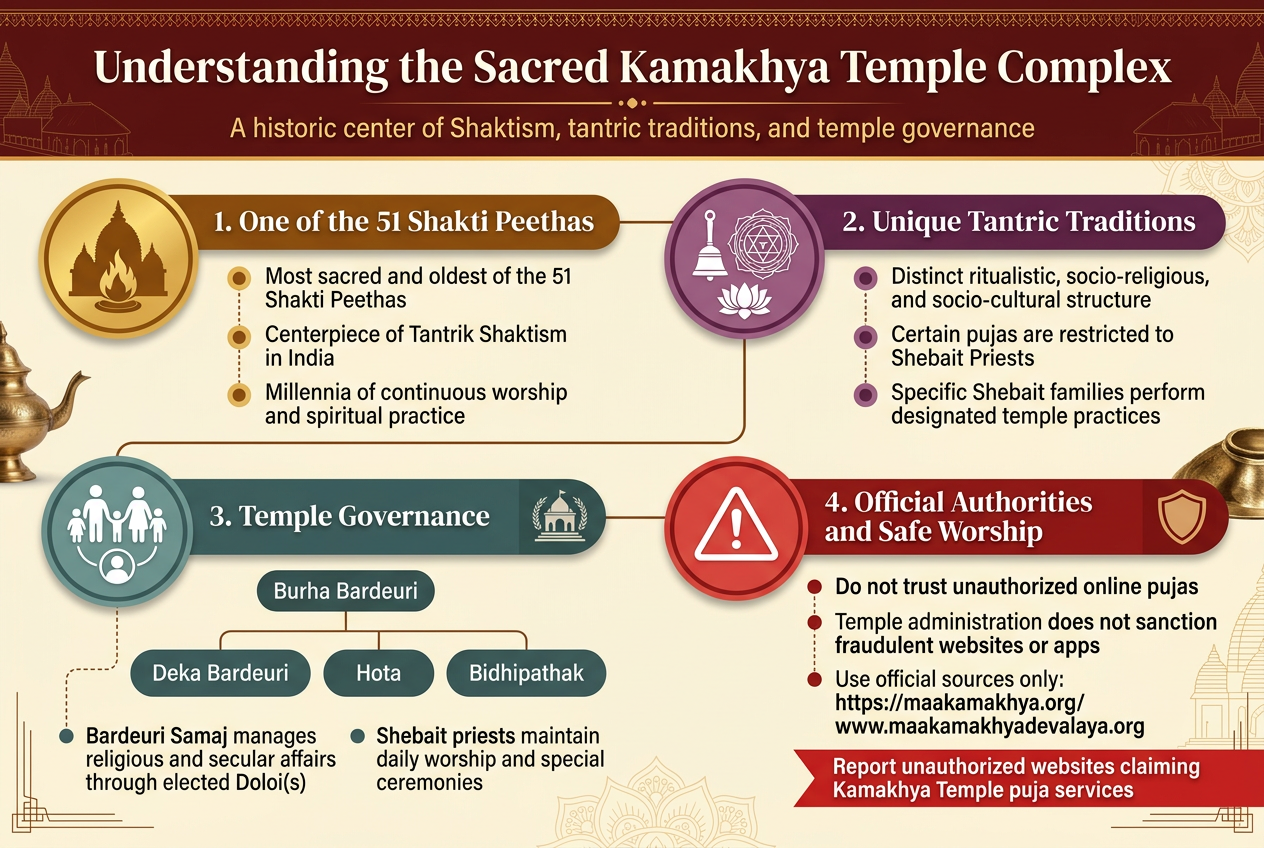
Maa Kamakhya Devalaya holds an extraordinary position in Hindu spirituality as the most sacred and oldest of the 51 Shakti Peethas on earth. This ancient temple complex stands as the centerpiece of the widely practiced and powerful Tantrik Shaktism cult in India, making it a paramount destination for devotees seeking divine feminine energy. The temple’s historical significance extends far beyond its architectural beauty, representing millennia of continuous worship and spiritual practice.
The Kamakhya Temple puja traditions have been preserved through centuries, maintaining their authentic essence while adapting to modern times. As devotees plan their Kamakhya Temple worship procedures, understanding this historical context becomes crucial for appreciating the depth and significance of every ritual performed within the sacred premises.
The ritualistic, socio-religious, and socio-cultural structure of the Kamakhya Temples’ Complex represents a unique system that sets it apart from other temples across India. The Kamakhya Temple rituals follow distinct tantric traditions where certain pujas and religious ceremonies are exclusively restricted to Shebait Priests, while other practices are performed by specific Shebait families.
This specialized approach to Kamakhya Temple worship procedures ensures that the ancient tantric methodologies remain pure and authentic. The temple’s unique system maintains the integrity of powerful spiritual practices that have been passed down through generations, making every Kamakhya Temple puja experience deeply meaningful for devotees.
The temple’s governance structure revolves around the Bardeuri Samaj, a traditional body consisting of adult male members from four specific families: Burha Bardeuri, Deka Bardeuri, Hota, and Bidhipathak. This governing body holds the customary right for managing the Devalaya’s religious and secular affairs through elected Doloi(s), ensuring that all Kamakhya Temple rituals are conducted according to established traditions.
The Shebait priests play a crucial role in maintaining the sanctity of daily worship and special ceremonies. Their involvement in Kamakhya Temple puja ensures that devotees receive authentic spiritual guidance while participating in various rituals and observances throughout the year.
The Maa Kamakhya Devalaya authorities maintain strict guidelines regarding authorized religious services to protect devotees from fraudulent practices. The temple administration does not legally sanction online pujas offered by unauthorized websites and applications, issuing clear warnings against solicitations for money through such platforms.
For genuine religious services and accurate information about Kamakhya Temple worship procedures, devotees should exclusively rely on official sources. The authorized websites include https://maakamakhya.org/ and www.maakamakhyadevalaya.org, where devotees can contact temple authorities directly. The administration encourages visitors to report any unauthorized websites claiming to offer Kamakhya Temple puja services, ensuring that the temple’s sacred traditions remain protected from commercial exploitation.
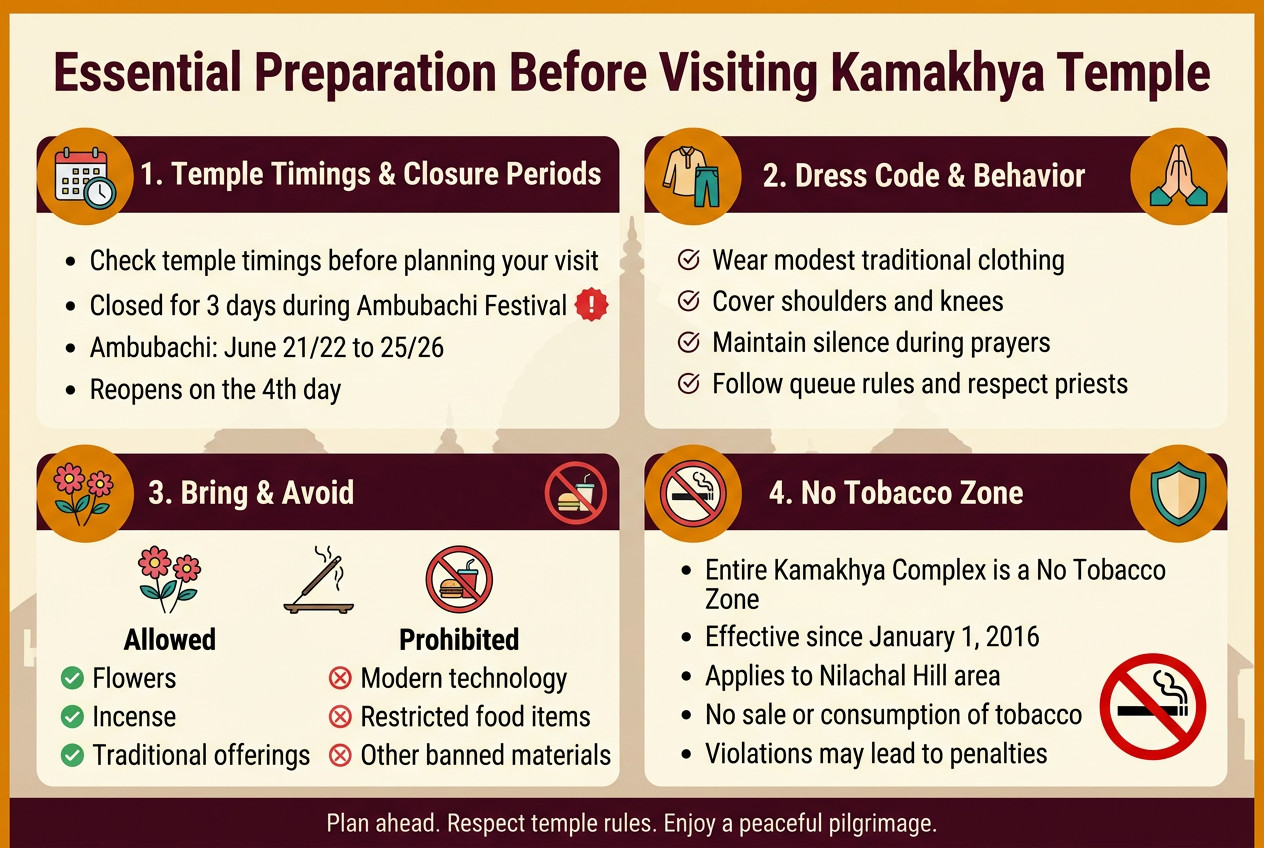
When planning your visit to Kamakhya Temple, understanding the temple’s operational schedule is crucial for a successful pilgrimage. The temple follows specific timings throughout the year, with certain periods marked by complete closure for important religious observances.
The most significant closure period occurs during the Ambubachi Festival, when the temple remains closed for three consecutive days. This sacred festival typically falls between June 21/22 to 25/26, during which devotees cannot access the main sanctum. The temple reopens on the fourth day, marking the conclusion of this important celebration. Planning your Kamakhya Temple puja around these dates requires careful consideration of this annual closure.
Proper attire and respectful behavior form the foundation of meaningful worship at this sacred site. When preparing for Kamakhya Temple rituals, devotees should prioritize modest clothing that reflects the sanctity of the temple environment. Traditional Indian attire is generally preferred, with emphasis on covering shoulders and knees appropriately.
Behavioral guidelines emphasize maintaining silence during prayers, following the queue system during peak times, and showing respect to temple priests and fellow devotees. Understanding these Kamakhya Temple worship procedures ensures that your spiritual experience remains undisturbed while contributing to the peaceful atmosphere that defines this holy place.
Successful preparation for your Kamakhya Temple visit involves carefully selecting appropriate offerings while avoiding prohibited items. Essential items for worship typically include flowers, incense, and traditional offerings that align with the goddess’s preferences. However, devotees must be aware of specific restrictions that govern what can be brought into the temple complex.
The temple administration maintains strict guidelines about materials allowed within the sacred premises. Modern technology restrictions, food limitations, and other prohibited items require advance planning to ensure your Kamakhya Temple devotee guide experience proceeds smoothly without unnecessary delays at security checkpoints.
Since January 1, 2016, the entire Kamakhya Complex, encompassing the whole Nilachal Hill area, has been declared a No Tobacco Zone by the Devalaya Administration. This comprehensive ban prohibits both the sale and consumption of tobacco products throughout the temple premises and surrounding areas.
Devotees planning their Kamakhya Temple preparation must understand that this regulation extends beyond the main temple structure to include all areas within the complex. Violating these tobacco-free zone regulations can result in penalties and may affect your ability to complete your intended worship. This environmental initiative reflects the temple’s commitment to maintaining a pure and healthy atmosphere for spiritual practices, aligning with the sacred nature of this important pilgrimage destination.
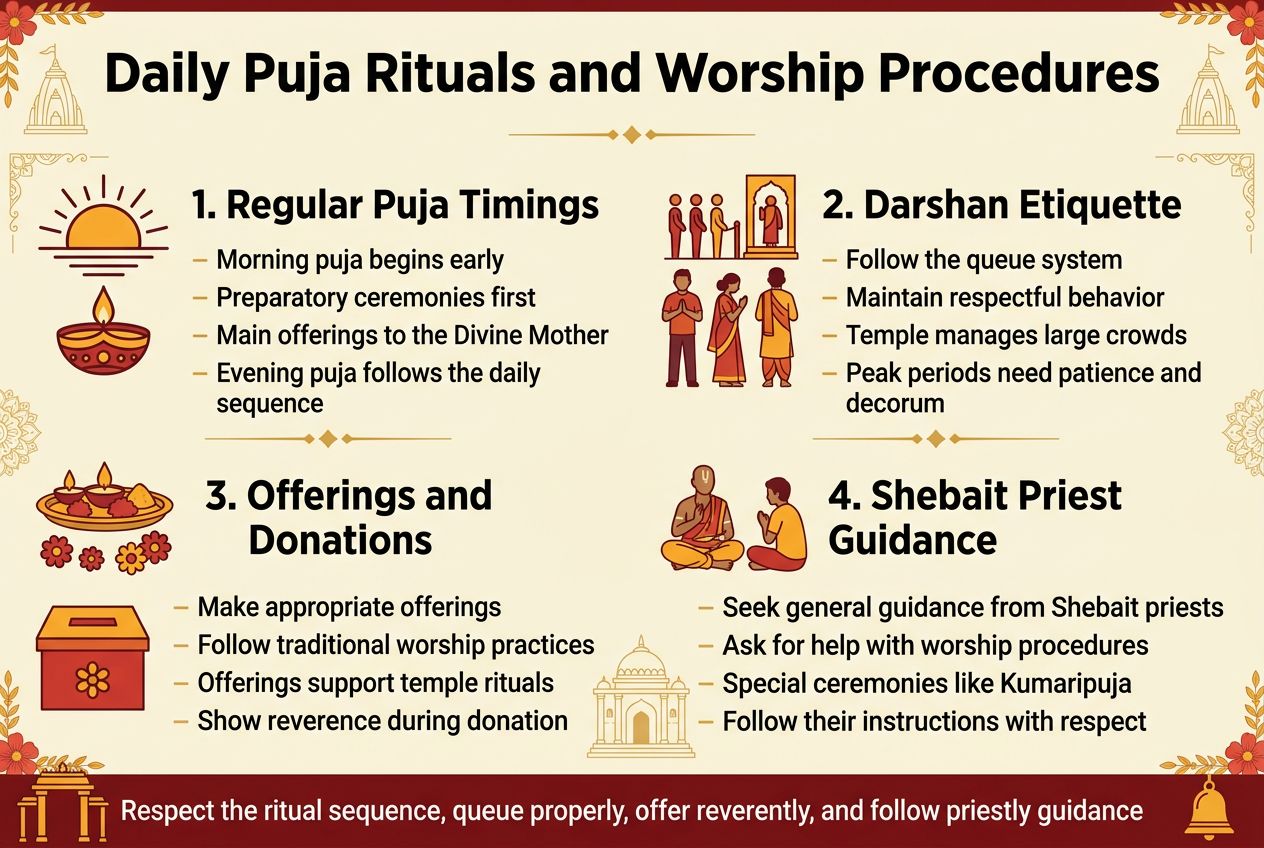
The Kamakhya Temple follows a structured daily worship schedule that devotees should understand before visiting. The temple conducts regular morning and evening pujas as part of its daily rituals, which form the foundation of worship at this sacred complex. These Kamakhya Temple puja ceremonies follow traditional sequences that have been maintained for centuries.
The daily rituals begin early in the morning with preparatory ceremonies, followed by the main puja offerings to the Divine Mother. Understanding these Kamakhya Temple rituals helps devotees plan their visit effectively and participate meaningfully in the worship procedures.
Thousands of devotees gather for darshan at Kamakhya Temple, especially after significant periods like the three-day closure during Ambubachi festival, when the temple reopens to receive blessings from the Divine Mother. The Kamakhya Temple worship procedures require devotees to maintain proper decorum while waiting in queues.
The darshan system is organized to ensure all visitors can have a meaningful spiritual experience. Devotees should follow the established queuing protocols and maintain respectful behavior throughout their visit. The temple management has implemented systematic procedures to handle large crowds, particularly during peak periods when thousands seek the Divine Mother’s blessings.
The temple accepts various forms of offerings during Kamakhya Temple puja ceremonies. Devotees can make appropriate donations as part of their worship, following the traditional practices established at this sacred site. The offering procedures are integral to the complete worship experience and should be performed with proper reverence.
These offerings form an essential component of the Kamakhya Temple rituals and allow devotees to express their devotion to the Divine Mother through material contributions that support the temple’s daily operations and ceremonial activities.
The Shebait priests at Kamakhya Temple serve as essential guides for devotees seeking to perform proper worship. General guidance and assistance for visiting the Kamakhya Temple complex can be obtained from these knowledgeable priests who understand the intricate Kamakhya Temple worship procedures.
Devotees can perform specialized ceremonies like Kumaripuja with the guidance and assistance of Shebait priests, who provide expert direction on proper ritual procedures. These priests possess deep knowledge of the temple’s unique traditions and can help visitors navigate the various Kamakhya Temple rituals appropriately. Their guidance ensures that devotees can participate meaningfully in the sacred ceremonies while respecting the temple’s ancient customs and protocols.
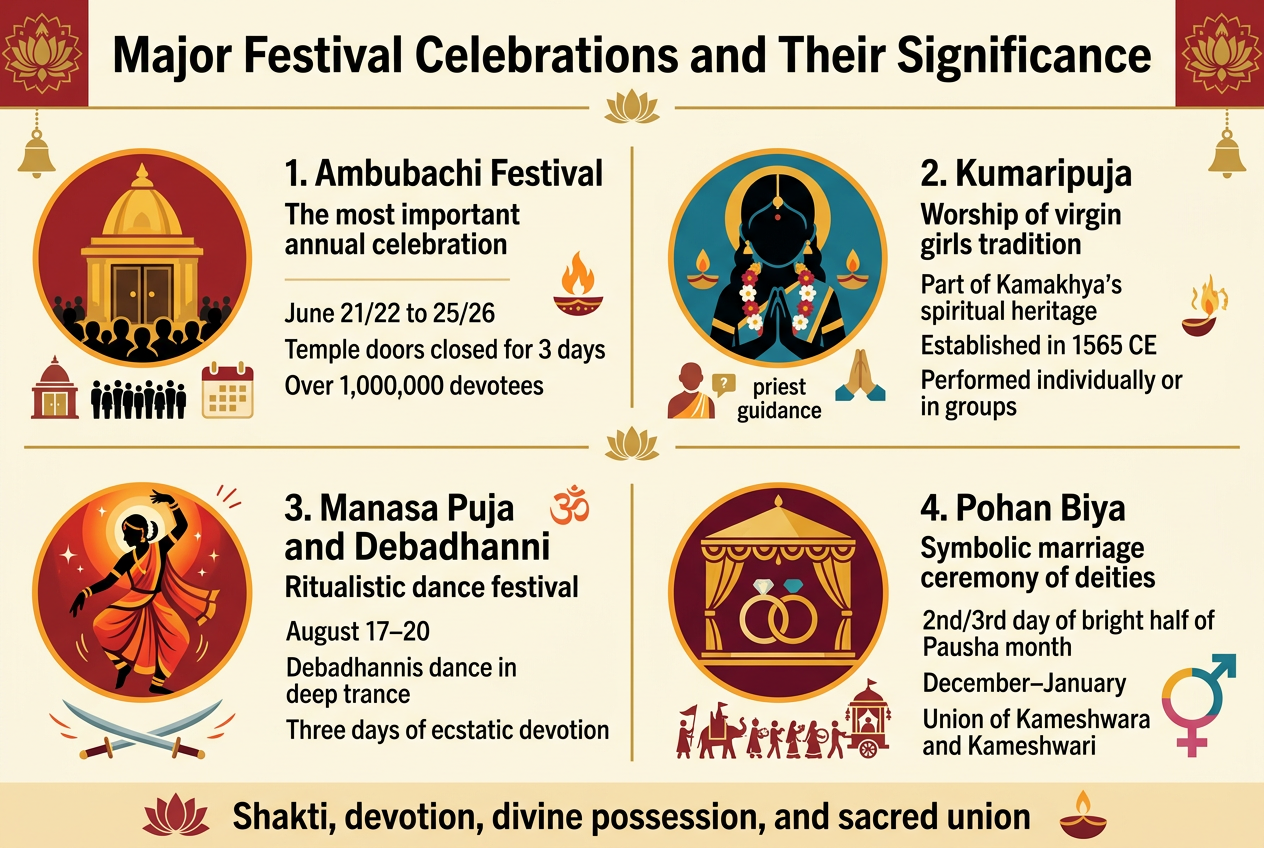
Ambubachi stands as the most significant ritualistic festival in the Kamakhya Temple calendar, celebrating Devi Kamakhya’s annual menstruation cycle. This extraordinary celebration takes place from June 21/22 to 25/26 each year, marking a period when the temple doors remain closed for three consecutive days. During this sacred time, the temple attracts over 1,000,000 devotees from across the globe, making it one of the largest spiritual gatherings in India.
The festival’s unique nature lies in its celebration of the divine feminine power and the natural cycles of womanhood. The temple closure during these three days represents the goddess’s retreat, and devotees gather in anticipation of the temple’s reopening, when they can receive the blessed prasad and witness the transformed deity.
Kumaripuja represents a deeply rooted tradition within Kamakhya’s religious system, focusing on the worship of virgin girls as embodiments of the divine feminine. This practice has been an integral part of the temple’s spiritual heritage since the renovation undertaken by Koch King Naranarayana in 1565 CE.
The ritual can be performed individually or in groups, with Shebait Priests providing essential guidance throughout the ceremony. The unique style of Kumaripuja at Kamakhya distinguishes it from similar practices at other temples, emphasizing the intrinsic connection between the worship of young girls and the temple’s reverence for Shakti energy.
The Manasa Puja and Debadhanni festival, celebrated from August 17-20, showcases one of the most mystical aspects of Kamakhya Temple worship procedures. This extraordinary event centers around the ritualistic dance of ecstasy performed by Debadhannis – men who become possessed by deities during the celebration.
These devoted dancers enter deep trances and perform continuous dances for three days, sometimes even dancing on sharpened sword blades, demonstrating their complete surrender to divine possession. The festival attracts thousands of devotees who witness this powerful display of spiritual ecstasy and divine connection.
Pohan Biya represents the symbolic marriage ceremony between Kameshwara and Kameshwari, performed during the 2nd/3rd day of the bright half of Pausha month (December-January). This sacred ritual involves elaborate processions and assigns specific ceremonial roles to the Shebait Priests, who conduct the marriage proceedings according to ancient traditions.
The ceremony emphasizes the divine union of masculine and feminine energies, reflecting the temple’s core philosophy of Shakti worship and the balance of cosmic forces.
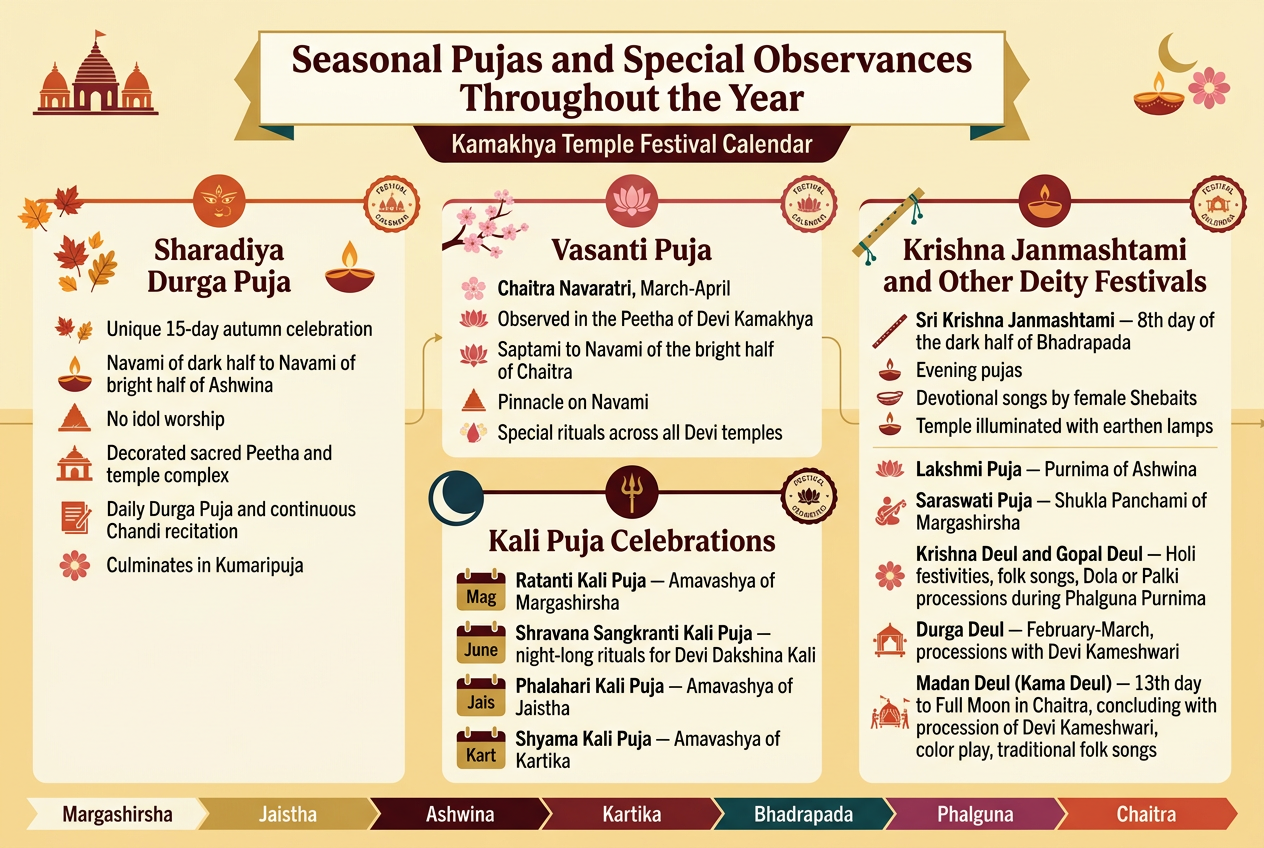
The Sharadiya Durga Puja at Kamakhya Temple stands apart from traditional Durga celebrations across India with its distinctive 15-day observance. This unique autumn festival commences from the Navami of the dark half and continues till the Navami of the bright half of Ashwina month, creating an extended period of divine worship unlike any other temple complex.
What makes this celebration extraordinary is the complete absence of traditional idol worship. Instead of installing elaborate Durga murtis, the sacred Peetha and the entire temple complex are adorned with lavish decorations, transforming the ancient shrine into a magnificent display of devotion. Daily Durga Puja rituals are performed with utmost reverence, accompanied by continuous Chandi recitation that fills the temple atmosphere with sacred vibrations.
The festival culminates in the beautiful tradition of Kumaripuja, where young girls are worshipped as embodiments of the Divine Mother, emphasizing the temple’s profound connection to feminine divinity.
The Vasanti Puja represents one of the most significant spring celebrations at Kamakhya Temple, perfectly timed with Chaitra Navaratri during March-April. This sacred observance takes place directly in the Peetha of Devi Kamakhya, creating an intimate connection between devotees and the goddess.
The festival spans from Saptami through Navami of the bright half of Chaitra, with each day building in spiritual intensity. The celebrations reach their pinnacle on Navami, when special Kamakhya Temple rituals are performed across all Devi temples within the complex, creating a harmonious symphony of worship throughout the sacred grounds.
Now that we have covered the major seasonal festivals, the temple’s calendar is enriched with multiple Kali Puja celebrations throughout the year, each carrying unique significance and timing:
Ratanti Kali Puja occurs during the Amavashya of Margashirsha, marking a powerful new moon observance dedicated to the fierce aspect of the Divine Mother.
Shravana Sangkranti Kali Puja stands out as one of the most elaborate celebrations, featuring night-long rituals specifically dedicated to Devi Dakshina Kali. These extended ceremonies create an atmosphere of intense spiritual energy throughout the temple complex.
Phalahari Kali Puja takes place during the Amavashya of Jaistha, while Shyama Kali Puja is observed on the Amavashya of Kartika, each offering devotees distinct opportunities to connect with different manifestations of Kali.
The temple’s celebration of Sri Krishna Janmashtami occurs on the 8th day of the dark-half of Bhadrapada, featuring enchanting evening pujas that create a mystical atmosphere. The celebration is enhanced by devotional songs performed by female Shebaits, whose melodious voices fill the temple with divine bhakti. The entire complex is illuminated with traditional earthen lamps, creating a mesmerizing display of light and devotion.
Beyond Krishna Janmashtami, the temple observes Lakshmi Puja on Purnima of Ashwina and Saraswati Puja on Shukla Panchami of Margashirsha, honoring different aspects of divine feminine energy.
The Krishna Deul and Gopal Deul celebrate Lord Gopala with special Holi festivities, incorporating devotional folk songs and grand processions in Dola or Palki during Phalguna Purnima. Similarly, Durga Deul celebrations during February-March involve Devi Kameshwari in vibrant processions featuring color play and special Kamakhya Temple worship procedures.
The Madan Deul (Kama Deul) celebration extends from the 13th day until Full Moon in Chaitra, honoring Kameshwara as Kamadeva. This festival concludes with a spectacular procession of Devi Kameshwari, where Shebaits and devotees engage in joyful color play while singing traditional folk songs, creating a perfect blend of devotion and celebration.
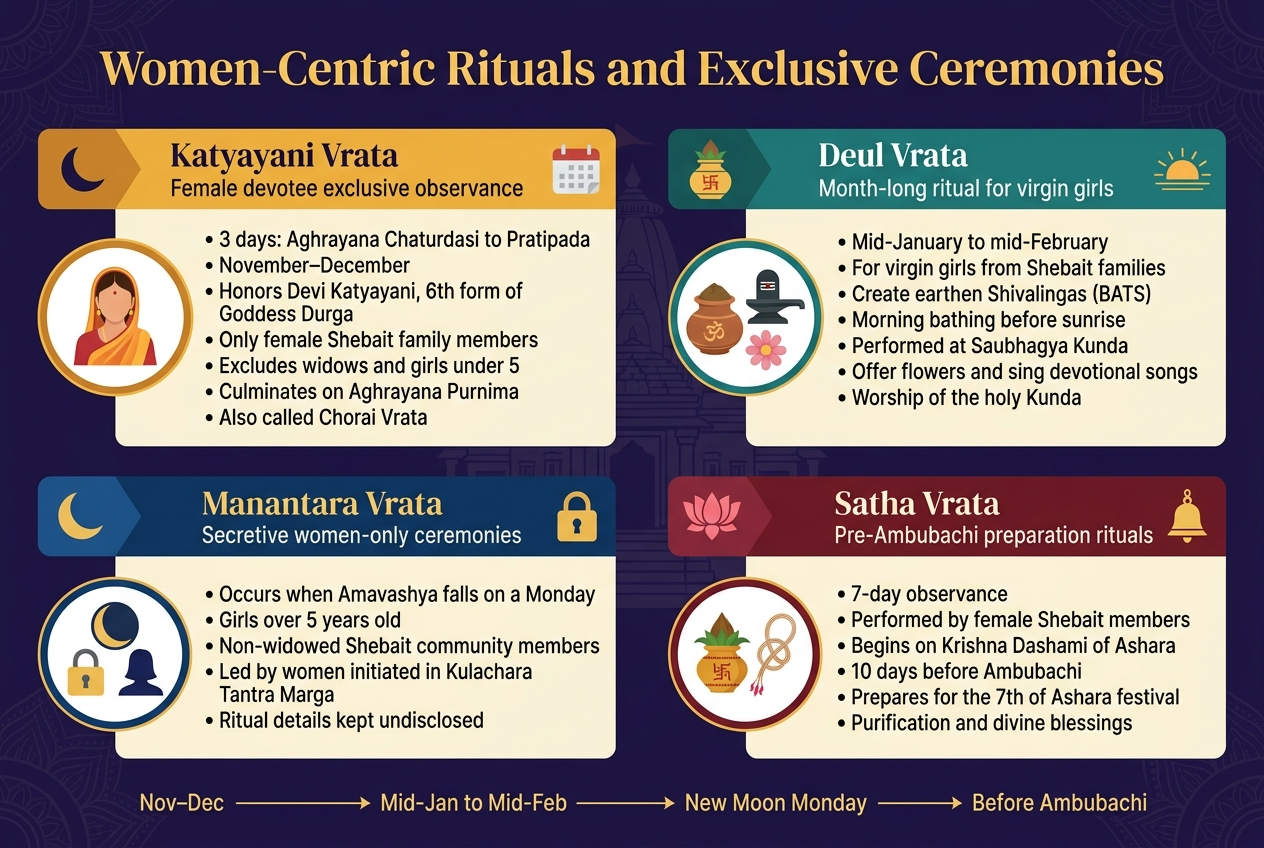
The Katyayani Vrata stands as one of the most sacred Kamakhya Temple women rituals, exclusively performed by female members of the Shebait families. This three-day observance spans from Aghrayana Chaturdasi to Pratipada, typically occurring during November-December. The ritual holds special significance as it honors Devi Katyayani, the sixth form of Goddess Durga, making it an integral part of Kamakhya Temple special ceremonies.
Participation in this vrata is restricted to specific female devotees within the Shebait community, with important exclusions for widows and girls under five years of age. The main Kamakhya Temple rituals of this observance culminate on Aghrayana Purnima, when the most important worship procedures take place. This ceremony is also known by its alternative name, Chorai Vrata, reflecting its deep-rooted traditions within the temple’s worship system.
Following the tradition of exclusive female ceremonies, the Deul Vrata represents a month-long Kamakhya Temple worship procedure specifically designed for virgin girls from Shebait families. This elaborate ritual takes place from mid-January to mid-February, demonstrating the temple’s commitment to involving young female devotees in sacred practices.
The ceremony centers around the preparation of earthen Shivalingas, known as BATS, which the participating girls create with devotion. Each morning before sunrise, these young devotees perform ritual bathing of the Shivalingas in the sacred Saubhagya Kunda. The Kamakhya Temple puja procedures include offering flowers and singing devotional songs, while simultaneously worshipping the holy Kunda itself, creating a comprehensive spiritual experience.
The Manantara Vrata represents one of the most mysterious aspects of Kamakhya Temple rituals, characterized by its secretive nature and strict women-only participation. This unique observance occurs when Amavashya (new moon) falls on a Monday, making it a rare and highly significant event in the temple’s ceremonial calendar.
Participation is limited to girls over five years of age and non-widowed members of the Shebait community. Women who have been initiated in the Kulachara Tantra Marga take leading roles in these ceremonies, emphasizing the tantric traditions that form the foundation of Kamakhya Temple’s spiritual practices. The secretive nature of this vrata means that its specific rituals and procedures remain undisclosed, maintaining the ancient tradition of preserving certain sacred knowledge within the initiated community.
Now that we have covered the major women-centric ceremonies, the Satha Vrata serves as a crucial preparatory ritual leading up to the famous Ambubachi festival. This seven-day observance is exclusively performed by female Shebait family members, beginning from Krishna Dashami of Ashara, precisely ten days before the onset of the Ambubachi celebration on the 7th of Ashara.
This Kamakhya Temple preparation ritual demonstrates the meticulous planning and spiritual preparation required for major temple festivals. The exclusive participation of female Shebait members highlights the important role women play in maintaining the temple’s spiritual traditions and preparing for significant religious observances. The timing of this vrata underscores its function as both a purification process and a means of invoking divine blessings before the temple’s most important annual celebration.
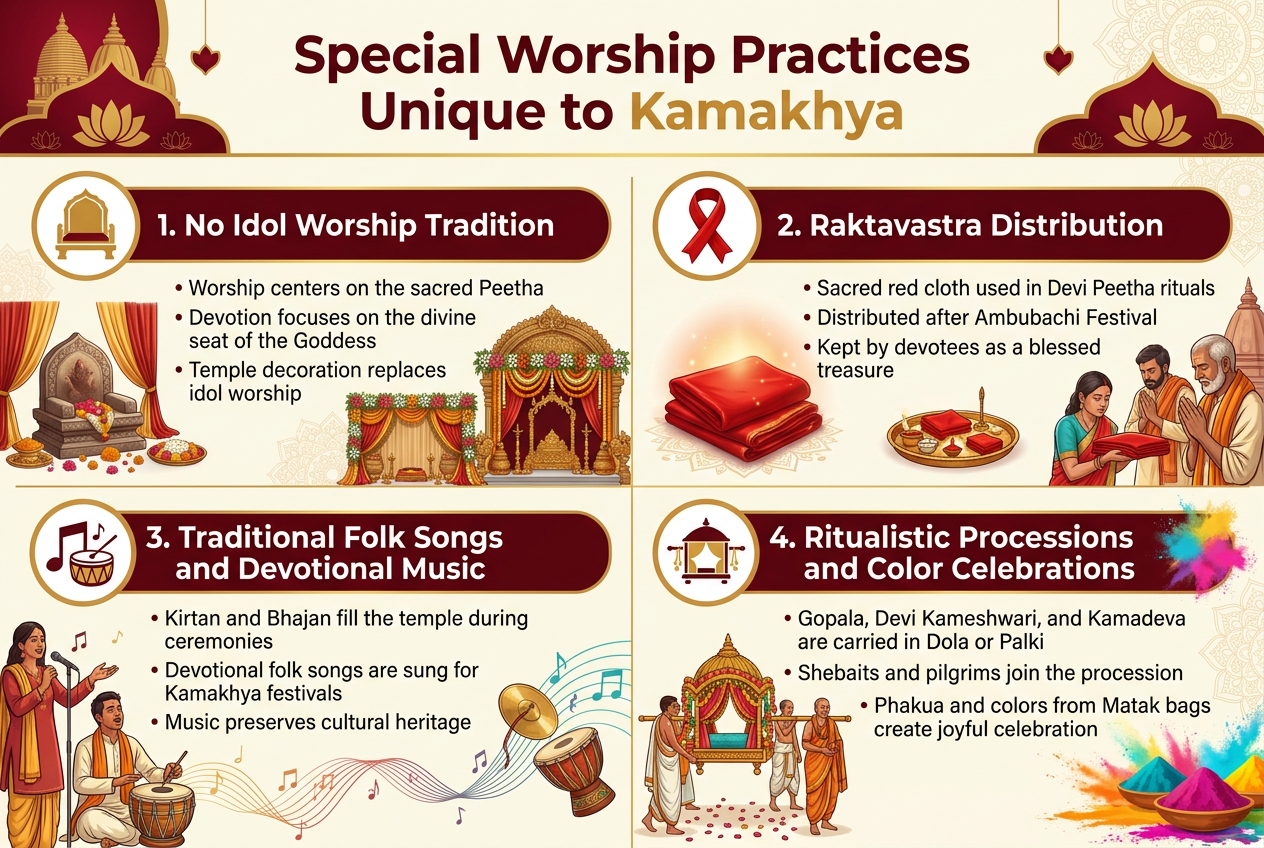
Kamakhya Temple stands apart from conventional Hindu worship practices by maintaining a unique tradition of non-idol worship. Unlike most temples where devotees offer prayers to sculpted deities, Kamakhya Temple rituals center entirely around the sacred Peetha – the divine seat of the Goddess. This distinctive approach reflects the temple’s profound connection to Tantric traditions and Shakti worship.
The absence of traditional idol worship means that all devotional energy and elaborate preparations focus on beautifying the Peetha itself and the temple complex. During major celebrations like Sharadiya Durga Puja, devotees and temple authorities lavishly decorate the sacred space with flowers, colorful fabrics, and intricate artistic arrangements. These decorations transform the temple into a vibrant celebration of divine feminine energy, creating an atmosphere that enhances the spiritual experience for every visitor.
The distribution of sacred red cloth, known as Raktavastra, represents one of Kamakhya Temple’s most revered traditions, particularly during the Ambubachi Festival. These pieces of red cloth hold extraordinary spiritual significance as they are used directly in the Devi Peetha during the festival ceremonies.
After the completion of Ambubachi Festival rituals, these blessed Raktavastra pieces are distributed among pilgrims who consider them highly auspicious and valuable spiritual treasures. Devotees believe that possessing these sacred cloths brings divine blessings and protection from the Goddess herself. Many families preserve these red cloths for generations, using them during personal prayers and important life events.
Music forms an integral component of Kamakhya Temple worship procedures, with traditional folk songs and devotional music creating the spiritual backdrop for various ceremonies. During the Ambubachi Festival, the temple resonates with the melodious sounds of Kirtan and Bhajan, filling the sacred space with divine vibrations that enhance the worship experience.
Specific festivals feature their own unique musical traditions. During Krishna Deul, Durga Deul, Madan Deul processions, and Janmashtami celebrations, devotees sing devotional folk songs that are specifically composed for Kamakhya worship. These musical traditions have been passed down through generations, preserving the cultural heritage and spiritual essence of the temple’s worship practices.
The temple’s festive celebrations feature elaborate ritualistic processions that showcase the divine deities in magnificent style. During these special occasions, sacred deities including Lord Gopala, Devi Kameshwari, and Kamadeva are ceremoniously carried through the temple complex in beautifully decorated Dola or Palki (palanquins).
These processions become vibrant celebrations where Shebaits (temple priests) and devoted pilgrims participate in joyful color play, using phakua or colors from Matak bags. As the processions move through the temple grounds, participants sing traditional devotional songs, creating an atmosphere of divine celebration that embodies the temple’s unique approach to worship. This combination of visual splendor, musical devotion, and community participation makes Kamakhya Temple’s ceremonial processions truly distinctive spiritual experiences.
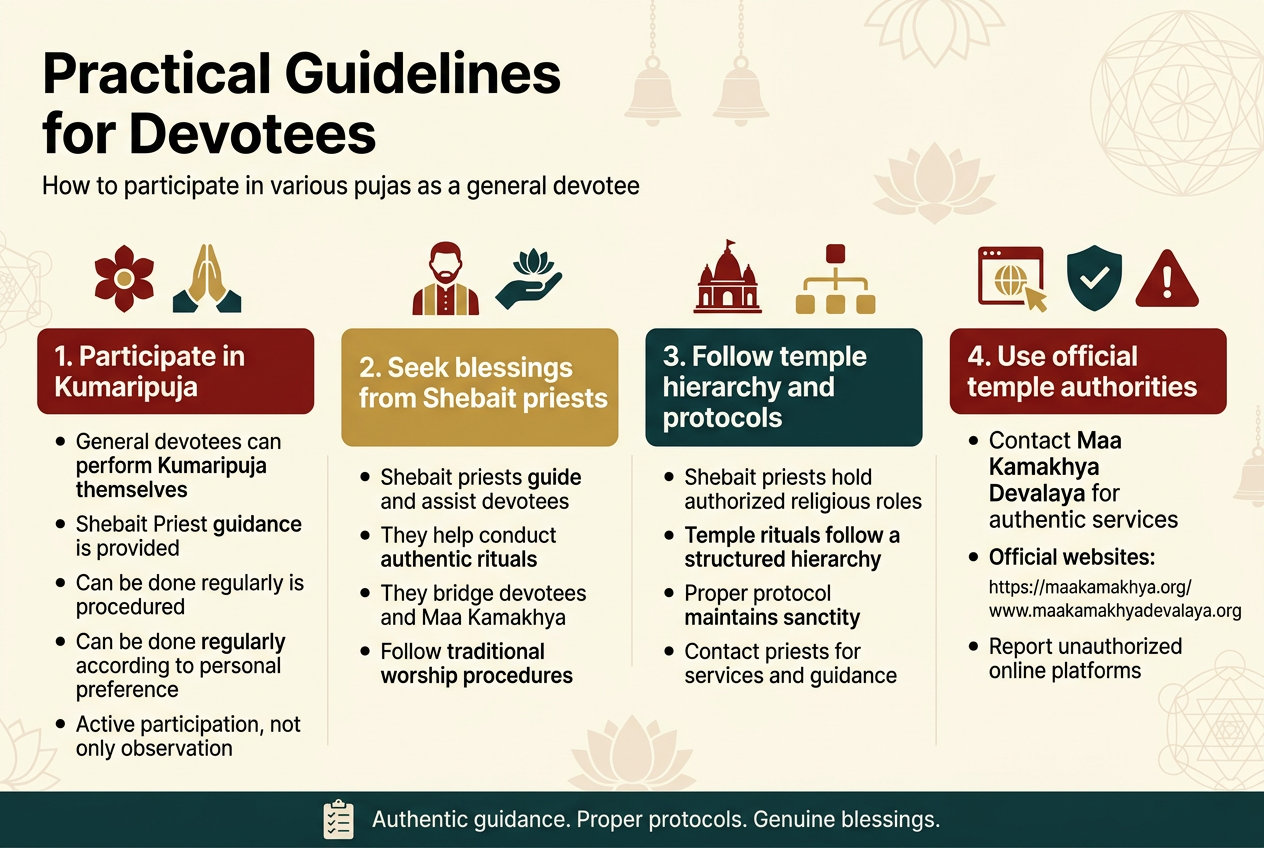
Devotees seeking to engage in the sacred rituals at Kamakhya Temple have excellent opportunities to participate directly in various pujas with proper guidance. The most notable practice available to general devotees is Kumaripuja, which devotees can perform themselves with the assistance and guidance of a Shebait Priest. This flexibility allows devotees to conduct the Kumaripuja according to their personal preference and on a regular basis, making it accessible for those who wish to maintain consistent spiritual practice.
The participation process is designed to be inclusive while maintaining the sanctity of the rituals. Devotees are not merely observers but active participants in these sacred ceremonies when they choose to engage with the temple’s authentic worship procedures. The guidance provided by the Shebait priests ensures that even those unfamiliar with the intricate details of Kamakhya Temple rituals can meaningfully participate while respecting traditional protocols.
The Shebait priests at Kamakhya Temple serve as essential spiritual guides for devotees seeking authentic blessings and ritual assistance. These priests are not only encouraged to provide guidance but actively assist devotees in performing various rituals, particularly the Kumaripuja ceremony. Their role extends beyond mere ceremonial functions – they serve as knowledgeable intermediaries who help bridge the gap between devotees and the divine feminine energy of Maa Kamakhya.
Devotees are strongly encouraged to seek blessings and guidance from these authorized Shebait priests, as they possess the traditional knowledge and spiritual authority to conduct authentic temple ceremonies. The priests provide comprehensive assistance throughout the ritual process, ensuring that devotees can participate meaningfully in the Kamakhya Temple worship procedures while maintaining the sacred traditions passed down through generations.
The temple operates under a structured hierarchy that maintains the sanctity and authenticity of all religious practices. The Shebait priests hold significant positions within this hierarchy, serving as the authorized religious practitioners who can provide legitimate services and guidance to devotees. Understanding this structure is crucial for devotees who wish to ensure their worship experiences are conducted according to proper religious protocols.
Information about services and proper protocols can be obtained directly by contacting the Shebait priests, who are well-versed in the temple’s traditional practices and authorized procedures. This hierarchical system ensures that all rituals, including the Kamakhya Temple puja ceremonies, are conducted with appropriate reverence and according to established spiritual guidelines.
For authentic services and reliable information regarding Kamakhya Temple puja practices, devotees must contact the official Maa Kamakhya Devalaya authorities directly. The temple maintains official communication channels through their authorized websites: https://maakamakhya.org/ and www.maakamakhyadevalaya.org. These official platforms serve as the primary sources for accurate information about temple services, ritual schedules, and authentic worship procedures.
Devotees are specifically advised to report any unauthorized online platforms that may claim to offer temple services. This precautionary measure protects devotees from fraudulent services and ensures they receive genuine spiritual guidance. By maintaining contact with official temple authorities, devotees can access authentic information about participating in various ceremonies, understanding proper protocols, and receiving legitimate blessings from authorized priests within the sacred Kamakhya Temple complex.
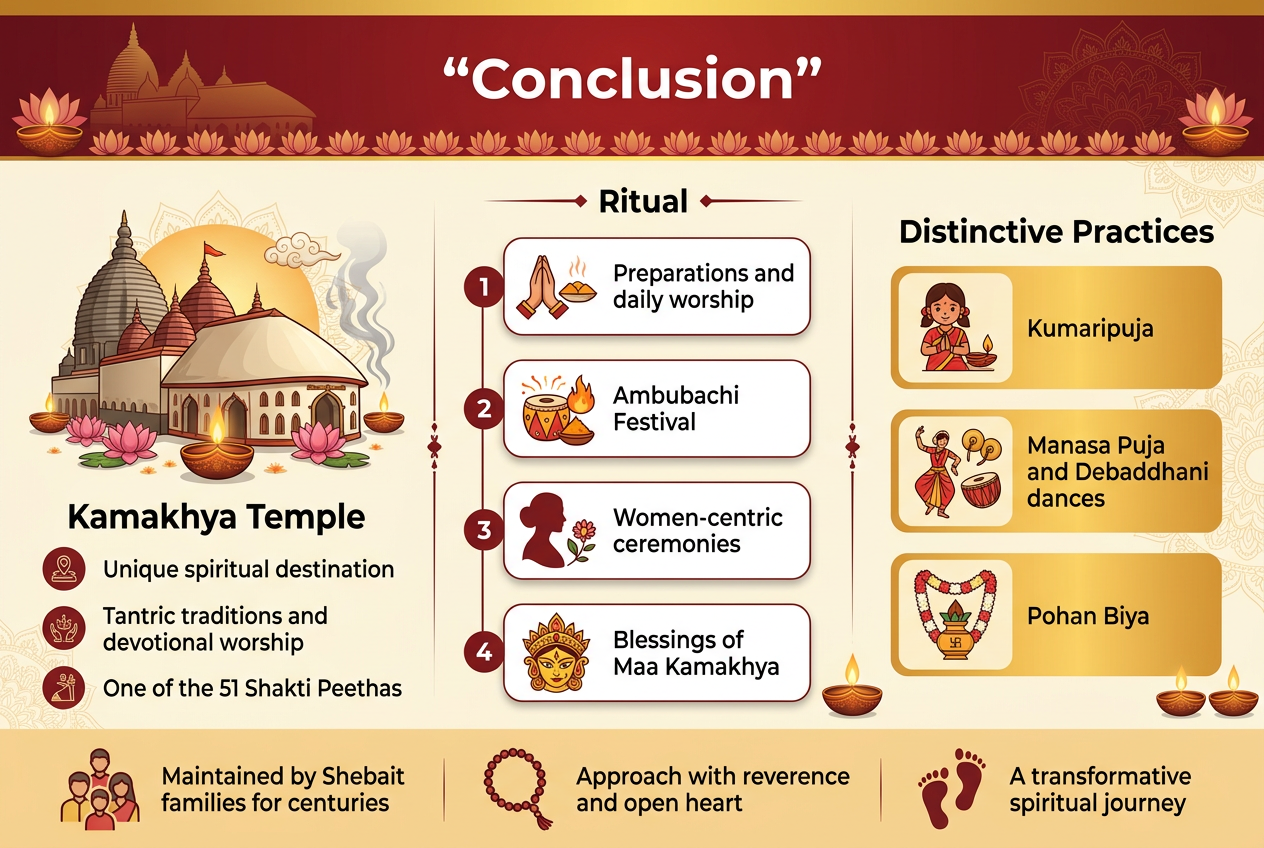
The sacred Kamakhya Temple stands as a unique spiritual destination where ancient Tantric traditions blend seamlessly with devotional practices. From the essential preparations and daily worship rituals to the magnificent festivals like Ambubachi and the exclusive women-centric ceremonies, each aspect of worship here carries profound significance. The temple’s distinctive practices, including Kumaripuja, Manasa Puja with its ecstatic Debaddhani dances, and the symbolic marriage ceremony of Pohan Biya, offer devotees unparalleled spiritual experiences that cannot be found elsewhere in India.
As you embark on your pilgrimage to this most sacred of the 51 Shakti Peethas, remember that Kamakhya is not just a place of worship but a living tradition maintained by the dedicated Shebait families for centuries. Whether you visit during the vibrant festival seasons or seek the tranquility of daily pujas, approach the Divine Mother with reverence, proper preparation, and an open heart. The blessings of Maa Kamakhya await those who come with genuine devotion, making every visit to this ancient seat of Shakti worship a transformative spiritual journey.